#1 India's Top IT Training Institute
×

About Uncodemy

Know more about who we are and what we stand for.

About Us

About Us

Discover our mission to equip individuals with essential IT skills and industry expertise.

Read More →
UnCodeMy Gallery

UnCodeMy Gallery

Explore highlights from our IT training sessions and success stories.

Read More →
Mentors

Mentors

Meet the industry experts who train and guide you through your course.

Read More →
Free Resources

Free Resources

Free tutorials, interview questions, tools and calculators to help you learn.

Explore →
×

Free Resources

Learn, practice and plan your career — bilkul free.

Tutorials

Tutorials

Step-by-step written tutorials to learn any technology at your own pace.

Read More →
Free Counselling

Free Counselling

Book a free video counselling session and pick the right course for you.

Read More →
Online Compiler

Online Compiler

Write, run and test your code online — no setup required.

Read More →
Speciality
Prof_Trained

15000+ Professionals Trained

Batch-every

3+ Batches every month

Prof_Trained

50+ Industry expert trainers

Corporate

2500+ Corporate Served

Master Full Stack Developer with our Advanced Full Stack Developer Training in Coimbatore

Boost your career with Uncodemy’s Advanced Full Stack Developer Course in Coimbatore. Our course is designed to provide you with the essential skills and knowledge for success in today’s data-driven industry. The course is perfect for beginners and professionals alike looking to enhance their Full Stack Developer expertise.

Curriculums for Full Stack Development

Full Stack Curriculum

The curriculum has been designed by experienced industry professionals.

time
200+

Hours of Content

live1-removebg-preview
120+

Live Sessions

tools
15+

Tools and Software

For complete Full Stack Developer training in Coimbatore, choose Uncodemy. Our course equips you with essential skills to succeed in web development. The curriculum covers theory and hands-on practice across key topics.

Course Overview

Uncodemy’s Full Stack Development Course in Coimbatore covers both front-end and back-end technologies in a comprehensive way. The program includes essential topics from fundamentals to advanced levels. Here’s a detailed look at what you can expect:

Full Stack Development Curriculum

Detailed Course Contents:

  • Introduction HTML
  • HTML Basics
  • HTML Elements
  • HTML5 Semantic
  • HTML Attributes
  • HTML Headings
  • HTML Paragraph
  • HTML Styles
  • HTML Formatting
  • HTML Computer Code
  • HTML Comments & Colours
  • HTML CSS, Links and Images
  • HTML Lists
  • HTML Blocks
  • HTML Layout
  • HTML Responsive
  • HTML JavaScript
  • HTML Head

Detailed course contents:

  • Introduction CSS3
  • CSS3 Syntax
  • CSS3 Colours
  • CSS3 Backgrounds
  • CSS3 Borders
  • CSS Padding
  • CSS Height/Width
  • CSS3 Gradients
  • CSS3 Shadows
  • CSS3 Text
  • CSS3 Fonts
  • CSS3 2D Transforms
  • CSS3 3D Transforms
  • CSS Box Model
  • CSS Display
  • CSS Position
  • CSS Align
  • CSS Pseudo-class
  • CSS Pseudo-element
  • CSS Navigation Bar
  • CSS Dropdowns
  • CSS3 Images
  • CSS Attr Selectors
  • CSS Forms
  • CSS Counters
  • CSS3 Animations
  • CSS3 Buttons
  • CSS3 Multiple Columns
  • CSS3 Filters
  • CSS3 Media Queries
  • CSS3 Responsive

Detailed course contents:

  • Introduction to Bootstrap
  • Bootstrap Basics
  • Bootstrap Grids
  • Bootstrap CSS
  • Typography
  • Tables
  • Forms
  • Corousel
  • Modal
  • Tooltip

Detailed course contents:

    Introduction to JavaScript

  • History of JavaScript
  • Advantages
  • Limitations
  • Script element
  • Creating your first JavaScript program
  • Coding convention
  • Setting up development environment (with VSCode)

Types and Statements

  • Keywords in JavaScript
  • Overview of Data types
  • Primitive Data types
  • Non-primitive Data types
  • Conditional statements
  • Loops

Operators

  • Introduction to operators
  • Operator precedence and associativity
  • Deep dive into operators
  • Arithmetic
  • Comparison
  • Ternary
  • Logical
  • Language
  • Language

Functions - Level I

  • Introduction to functions
  • Function definition
  • Passing values
  • Returning values
  • Local and global variables
  • Functions as objects
  • Function constructor

Functions - Level II

  • Function invocation patterns
  • Arrow functions
  • JavaScript scopes
  • Function closures

Arrays and Strings

  • Introduction to Arrays
  • Array declaration
  • Array access methods
  • Multi-dimensional arrays
  • String properties
  • String access methods

Objects in JavaScript

  • Introduction to objects
  • Type of objects in JavaScript
  • Creating objects
  • Object methods
  • Constructor function
  • Prototype in JavaScript
  • Inheritance using prototype chain

Event handling

  • JavaScript events
  • Event handler
  • Event flow
  • Event bubbling and capturing
  • Event types

Document Object Model (DOM)

  • Introduction to DOM
  • Types of DOM
  • DOM standards and methods
  • Manipulating documents using DOM
  • Handling images
  • Table manipulation
  • Animation
  • Node and Node-list handling

Form Handling

  • Introduction to forms
  • Form processing
  • Forms object
  • Accessing data from forms
  • Form validation
  • Additional features in forms
  • Validation APIs

Debugging Techniques

  • JavaScript Errors
  • Error handling mechanisms

Detailed course contents

  • Introduction to jQuery
  • jQuery Syntax
  • jQuery Selectors
  • jQuery Events
  • jQuery Effects
  • jQuery HTML
  • jQuery Traversing
  • jQuery AJAX & Misc

Detailed course contents:

    Introduction to React

  • History of React
  • Key Benefits of React
  • React development environment
  • Creating your first React Application
  • React Source code structure

JSX

  • Introduction to JSX
  • Coding in JSX
  • Expressions in JSX
  • Working with HTML
  • Conditional Constructs

Components

  • Introduction to components
  • Why Components?
  • Writing JSX code in components
  • Adding CSS
  • Populating Data Dynamically
  • Passing data through "props"
  • Multiple Components

State and Event Binding

  • Introduction to Events
  • Event Handlers
  • Working with state
  • Data Binding
  • Controlled and Uncontrolled Components

Rendering Lists and Conditional Contents

  • Rendering lists of data
  • Using stateful list
  • Keys in data
  • Conditional Contents
  • Adding dynamic styles

Debugging Techniques

  • Understanding error message
  • Code flow and warnings
  • Breakpoints
  • Using React Dev Tools

Class based Components

  • What and Why?
  • Adding first class based component
  • Working with states and events
  • Component Life cycle and in action
  • Class based vs functional component

HTTP

  • Introduction to HTTP
  • Methods in HTTP
  • Response code in HTTP
  • Introduction to REST interfaces
  • Characteristics of REST
  • Introduction to JSON
  • JSON data representation
  • GET request
  • Using async and await
  • Handling Http errors
  • useEffects()
  • POST request

Custom React Hooks

  • What are custom hooks?
  • Creating and using custom hooks
  • Custom HTTP hooks

Forms

  • Introduction to Forms
  • Working with user input and submission
  • Adding validation
  • Working with custom hooks

Routing and Navigation

  • Introduction to Single Page Applications
  • What is Routing?
  • Why Routing?
  • Installing react router
  • Defining and using routes
  • Working with links
  • Dynamic routes with Params
  • Nested routes
  • Redirecting the user
  • Working with query Param
  • Sending and getting data via HTTP

Authentication

  • What is authentication?
  • Why and How?
  • Authentication tokens
  • Setting up
  • Adding signup
  • Showing feedback to the user
  • Adding User login
  • Using tokens
  • Redirecting the user
  • Adding logout
  • Protecting frontend pages
  • Persisting User authentication status
  • Adding auto logout

Deployment

  • Introduction
  • Deployment steps
  • Adding lazy loading
  • Building the code for production
  • Getting started with deployment
  • Handling routes and finishing deployment

Backend Development Curriculum

Detailed course contents:

  • Introduction
  • RESTful Services
  • Introducing Express
  • Building Your First Web Server
  • Nodemon
  • Environment Variables
  • Route Parameters
  • Handling HTTP GET Requests
  • Handling HTTP POST Requests
  • Calling Endpoints Using Postman
  • Input Validation
  • Handling HTTP PUT Requests
  • Handling HTTP Delete Requests

Express - Advanced Topics

  • Middleware
  • Creating Custom Middleware
  • Built-In Middleware
  • Third-party Middleware
  • Environments
  • Configuration
  • Debugging

Asynchronous JavaScript

  • Synchronous Vs. Asynchronous Code
  • Patterns For Dealing with Asynchronous Code
  • Callbacks
  • Callback Hell
  • Named Functions to Rescue
  • Promises
  • Replacing Callbacks with Promises
  • Consuming Promises
  • Creating Settled Promises
  • Running Parallel Promises
  • Async and Await

Detailed course contents:

  • What is Node
  • Node Architecture
  • How Node Works
  • Installing Node
  • Your First Node Program
  • Event Loop

Node Module System

  • Introduction
  • Global Object
  • Modules
  • Creating a Module
  • Loading a Module
  • Module Wrapper Function
  • Path Module
  • OS Module
  • File System Module
  • Events Module
  • Event Arguments
  • Extending Event Emitter
  • HTTP Module

Node Package Manager (NPM)

  • Introduction
  • Package.json
  • Installing a Node Package
  • Using a Package
  • Package Dependencies
  • NPM Packages and Source Control
  • Semantic Versioning
  • Listing the Installed Packages
  • Viewing Registry Info for a Package
  • Installing a Specific Version of a Package
  • Updating Local Packages
  • DevDependencies
  • Uninstalling a Package
  • Working with Global Packages
  • Publishing a Package
  • Updating a Published Package

Detailed course contents:

    CRUD Operations Using MongoDB

  • Installing MongoDB
  • Connecting to MongoDB
  • Schemas
  • Models
  • Saving a Document
  • Querying Documents
  • Comparison Query Operators
  • Logical Query Operators
  • Regular Expressions
  • Updating Documents- Query First
  • Updating a Document- Update First
  • Removing Documents

Authentication and Authorization

  • Introduction
  • Introduction
  • Creating the User Model
  • Registering Users
  • Authenticating Users
  • Testing the Authentication
  • JSON Web Tokens
  • Generating Authentication Tokens
  • Storing Secrets in Environment Variables
  • Setting Response Headers
  • Encapsulating Logic in Mongoose Models
  • Authorization Middleware
  • Protecting Routes
  • Getting the Current User
  • Logging Out Users
  • Role Based Authorization
  • Testing the Authorization

Handling and Logging Errors Deployment

  • Introduction
  • Preparing the App for Production
  • Preparing the App for Deployment
  • Adding the Code to a Git Repository
  • Setting Environment Variables
  • MongoDB in the Cloud

Python Overview

  • Why do we need Python?
  • Program structure

Environment Setup

  • Python Installation
  • Execution Types
  • What is an interpreter?
  • Interpreters vs Compilers
  • Using the Python Interpreter
  • Interactive Mode
  • Running python files
  • Working with Python shell
  • Integrated Development Environments
  • Interactive Mode Programming
  • Script Mode Programming

Basic Concepts

  • Basic Operators
  • Types of Operator
  • Python Arithmetic Operators
  • Python Comparison Operators
  • Python Assignment Operators
  • Python Bitwise Operators
  • Python Logical Operators
  • Python Membership Operators(in, not in)
  • Python Identity Operators (is, is not)
  • Python Operators Precedence
  • Data Types
  • Variables
  • Assigning Values to Variables
  • Multiple Assignment
  • Python Numbers
  • Python Strings
  • Accessing Values in Strings
  • String Special Operators
  • String Formatting Operator
  • Triple Quotes
  • Built-in String Operations
  • Python Lists
  • Accessing Values in Lists
  • Updating Lists
  • Delete List Elements
  • Basic List Operations
  • Indexing, Slicing, and Matrixes
  • Built-in List Functions & Methods
  • Python Tuples
  • Accessing Values in Tuples
  • Updating Tuples
  • Delete Tuple Elements
  • Basic Tuples Operations
  • Indexing, Slicing, and Matrixes
  • No Enclosing Delimiters
  • Built-in Tuple Functions
  • Python Dictionary
  • Accessing Values in Dictionary
  • Updating Dictionary
  • Delete Dictionary Elements
  • Properties of Dictionary Keys
  • Built-in Dictionary Functions & Methods

Basic Operators in Python

  • Types of Operator
  • Python Arithmetic Operators
  • Python Comparison Operators
  • Python Assignment Operators
  • Python Bitwise Operators
  • Python Logical Operators
  • Python Membership Operators
  • Python Identity Operators (is, is not)
  • Python Operators Precedence

Loops and Decision Making

  • if statements
  • else statements
  • nested if statements
  • while loop
  • for loop
  • nested loops
  • Loop Control Statements
  • 1) break statement
  • 2) continue statement
  • 3) pass statement

SECTION – II Functions

  • Defining a Function
  • Syntax
  • Calling a Function
  • Pass by reference vs value
  • Function Arguments
  • Required arguments
  • Keyword arguments
  • Default arguments
  • Variable-length arguments
  • The return Statement
  • Scope of Variables
  • Global vs. Local variables

Python Modules and Packages

  • Framework vs Packages
  • Folium Introduction
  • Why are modules used?
  • Creating modules
  • The import Statement
  • The from...import Statement
  • The from...import * Statement
  • Locating Modules
  • The PYTHONPATH Variable
  • Namespaces and Scoping
  • The dir( ) Function
  • The globals() and locals() Functions
  • The reload() Function
  • Packages in Python

Basic OOPs Concept

  • Creating class in Python
  • Documented String
  • Private Identifier
  • Constructor
  • Inheritance
  • Polymorphism

Decorator, Iterator and Generator

  • Anonymous Function
  • Lambda
  • Map
  • Filter
  • Reduce

File Manipulation

  • Opening Text File
  • Working with a File on Python
  • The open function
  • File modes
  • The file object attributes
  • close() method
  • write() method
  • read() method
  • Files: Input
  • Files: Output
  • Reading files
  • Renaming & deleting files
  • Writing into a file
  • remove() method

Python GUI

  • Basic Operations using Tkinter
  • Buttons and Textbox
  • Menu Bar
  • Message Box and Radio Button
  • Checkbox and Event Creating
  • Creating Application in GUI

SQL and Python

  • Overview of SQLite
  • Integrating Python with SQLite

Advanced Concept – Overviews

  • Networking Overview
  • Sending and Receiving Email by Python
  • Basics of Pandas and Numpy
  • How to use Anaconda
  • How to create dashboard
  • Overview of Django

INTRODUCTION TO JAVA

  • Why Java was Developed
  • Application Areas of Java
  • History of Java
  • Platform Independency in Java
  • USP of Java: Java Features
  • Sun-Oracle Deal
  • Different Java Platforms
  • Difference between JDK,JRE,JVM
  • Java Versions
  • JVM Architecture
  • Installing Java on Windows
  • Understanding Path Variable: Why Set Path
  • Installing Eclipse
  • Installing Netbeans

CREATING FIRST JAVA PROGRAM

  • Understanding Text Editors to Write Programs
  • How to compile java file
  • Byte Code and class file
  • How to run class file

JAVA LANGUAGE FUNDAMENTALS

  • Identifiers
  • Keywords
  • Variables
  • Literals
  • Data Types
  • Operators
  • Comments
  • Looping Statements
  • Condition Statements
  • Type Casting

OOP IMPLEMENTATION

  • Why OOP
  • OOP Concepts with Real life examples
  • Class& it's Syntax
  • Object& it's Syntax
  • Reference Variable
  • Constructors
  • Instance(Non-Static) & Static Variables
  • Instance(Non-Static) & Static Methods
  • this Keyword and it's usages
  • Object & Static Initializers (Anonymous Blocks)
  • inheritance & its Syntax
  • Types of Inheritance
  • Object Class as Root of Java Class Hierarchy
  • Variable Hiding
  • Method Hiding
  • Method Overriding
  • Method Overloading
  • Super keyword and its usages
  • Final keyword and its usages
  • Constructor Chaining
  • Upcasting and Downcasting
  • Static & Dynamic Binding
  • Runtime Polymorphism
  • Abstract Keyword (Abstract classes and methods)
  • Understanding Interfaces
  • Implementation of Encapsulation
  • Association with Implementation

PACKAGES

  • Understanding Packages
  • Setting Classpath
  • Reading Input from Keyboard
  • Access Modifiers
  • With in Package & Outside Package Implements

NESTED TYPES

  • Static Nested Class
  • Non-static Nested Class
  • Local Class
  • Anonymous Class
  • Nested Interface

ARRAYS

  • General Definition of Array Advantages from Array
  • Arrays in Java
  • 1-d Arrays
  • 2-d Arrays
  • Jagged Arrays
  • Array of reference type
  • Operations on Arrays
  • User Define Array & Object Type

COMMAND LINE ARGUMENTS AND WRAPPER CLASSES

  • Wrapper Classes
  • Parsing of Numeric Strings
  • String representation of Primitives

EXCEPTION HANDLING

  • Types of Runtime Errors
  • Understanding Exceptions
  • Exception Class Hierarchy
  • Try & Catch Blocks
  • Patterns of Catch Block
  • Nested Try statements
  • Throw, throws and finally
  • Creating Custom Exceptions
  • Checked & Unchecked Exceptions
  • Assertion

WORKING WITH STRINGS

  • What is String
  • String Class
  • Creating String Object
  • Operations on String
  • String Buffer Class and it's Methods
  • Difference between String and String Buffer class
  • StringBuilder Class and it's Methods
  • Difference between StringBuffer and StringBuilder

SWING

  • Introduction to AWT
  • Introduction to Swing Components
  • Look And Feel of Swing Components
  • MVC Architecture of Swing Components
  • Working with Image
  • Advance Swing Components
  • JOptionPane, JTree, JTable, JTabbedPane
  • JfileChooser, JcolorChooser
  • Menu Components
  • JMenu
  • JMenuitem
  • JMenubar

MULTITHREADED PROGRAMMING

  • Multitasking: Why Concrrent Execution
  • Multiprocessing v/s Multithreading
  • Main Thread (Default Java Thread)
  • Creating Child Threads and unders-tanding context switching
  • Thread States
  • Thread Group
  • Thread Synchronisation: Methods and Blocks
  • Inter-Thread communication
  • Daemon Threads
  • Deadlock

I/O STREAMS

  • What is I/O
  • Why Need Streams
  • Byte Streams and Character Streams
  • Read/Write operations with file
  • Scanner Class
  • Object Serialization & Deserialization
  • Transient keyword
  • File Class and it's Methods

REFLECTION

  • Understanding the Need Of Reflection
  • Getting information about class's modifiers, fields, methods, constructors and superclasses Finding out constant anmethod declaration belong to an interface
  • Creating an instance of the class whose name is not known until runtime
  • Getting and setting values of an object's field if field name is unknown until runtime
  • Invoking Private Methods
  • Invoking a method on an object if the method is unknown until runtime

EXTENDED & UTILITY CONCEPTS

  • Generics
  • Lambda Expression
  • Annotations
  • Object Cloning
  • Vargs
  • Static-import
  • Enum
  • Static, Default and Private Methods of Interface
  • Var Type
  • Java Modules
  • Stream API

COLLECTIONS FRAMEWORK

  • What is Collection?
  • What is Framework?
  • Collections Framework
  • Core Interfaces
  • Collection, List, Queue, Deque
  • Set, NavigableSet, SortedSet Map, NavigableMap, SortedMap
  • Core Classes
  • ArrayList, LinkedList, Priority Queue, ArrayDeque
  • HashSet, LinkedHasSet, TreeSet,
  • HashMap, IdentityHashMap, WeakHash-Map, LinkedHashMap, Tree Map
  • Accessing a Collection via an Iterator
  • Accessing List via ListIterator
  • Accessing a Collection via for each loop
  • Working with User Defined Objects
  • The Comparator and Comparable Interfaces
  • The Legacy classes and Interfaces.
  • Enumeration, Vector, Stack
  • Hashtable, Properties

DATE & TIME API

  • java.util.Date
  • java.util.Calender
  • java.sql.Date

SYSTEM PROPERTIES & INTERNATIONALISATION (I18N)

  • Understanding Locale
  • Resource Bundle
  • Usage of properties file
  • Fetching text from Resource Bundle
  • Displaying the text in HINDI

INTRODUCTION TO SQL (PROJECT BASED) DATABASE PROGRAMMING USING JDBC

  • Need Of JDBC
  • JDBC Drivers
  • Statement, PreparedStatement, CallableStatement
  • Scrollable and Updatable ResultSet
  • Batch Updates
  • Transaction
  • Metadata
  • Connection Database
  • Oracle
  • My SQL

JAVA EE(JAVA PLATFORM ENTERPRISE EDITION)

  • Understanding the Concept of Java EE: JEE Specification
  • Java EE Architecture
  • Single Tier
  • Two Tier
  • Three Tier
  • N-Tier
  • Java EE Components\
  • Web Components
  • Distributed(Business) Components
  • Java EE Containers & Servers
  • Web Container & Web Server (Apache Tomcat)
  • EJB Container & Application Server (Weblogic, Glassfish, Websphere)
  • Java EE Services
  • JNDI Service
  • Java Transaction Service
  • JAAS
  • JMS

JAVA SERVLET

  • Introduction to web programming
  • Role of Servlet in web programming
  • Servlet Lifecycle
  • Servlet with Annotations
  • @WebServlet
  • @WebInitParam
  • @WebListener
  • @WebFilter
  • @MultipartConfig
  • Request Dispatching
  • Parameters & Attributes their differences
  • ServletConfig and ServletContext
  • File Uploading and Downloading

Session Tracking & State Management

  • Cookie
  • Url Rewriting
  • Hidden Form Field
  • Session Object
  • Events & Listeners
  • Dependency Injection
  • Refreshing Servlet
  • Filters

JAVA SERVER PAGES (JSP) & JSTL

  • JSP Architecture
  • JSP Elements
  • JSP Objects
  • Understanding JavaBeans
  • Custom Tags
  • Using tags of JSTL
  • Expression Language

PROJECT CLASSES

  • Back End Coding
  • DATABASE DESIGNING
  • Connecting forms to database
  • Writing Business Logic
  • Project Hosting
  • DESIGN PATTERN
  • Why Design Patterns...?
  • Front Controller
  • Composite View
  • Factory Pattern
  • Singleton Pattern
  • DAO Pattern

JAVA MAIL API

  • Email System and Protocols
  • Sending & Receiving Mails
  • Handling Attachments

INTRODUCTION TO DISTRIBUTED PROGRAMMING

  • RMI
  • Web Services

INTRODUCTION TO RESTFUL SERVICES

  • @PathParam
  • @Path
  • @FormParam
  • @QueryParam
  • @DefaultValue

OVERVIEW OF JPA FRAMEWORK MAVEN DEPLOYMENT BASIC BEAN WIRING SPRING

  • What is Spring?
  • Spring modules
  • Understanding dependency Injection
  • Applying aspect-oriented programming

MAVEN DEPLOYMENT

  • Maven Configuration
  • Converting Maven to Eclipse
  • Various Maven Command

BASIC BEAN WIRING

  • Containing your Bean
  • Creating bean
  • Injecting into bean properties

Auto wiring Controlling bean creation

  • Aspect Oriented Programming

INTRODUCTION TO HIBERNATE

  • Hibernate Architecture
  • Hibernate configuration
  • Hibernate's Support for Other Technologies
  • Installing Hibernate
  • A "Hello world" stand alone application

CREATING PERSISTING CLASSES

  • Mapping a basic Java Class
  • Mapping a Class with Binary Data
  • Mapping a Serializable Class

Mapping a class with Data/calendar attributes

  • Mapping a Read-only class
  • Mapping a class using Versioning /Timestamps

MAPPING INHERITANCE WITH JAVA CLASSES

  • Table-Per-class Hierarchy Mapping
  • Table-Per-subclass Hierarchy Mapping
  • Table-Per-concrete-subclass Hierarchy Mapping
  • Persistence interfaces

WORKING WITH COLLECTIONS

  • Associations
  • Lazy initialization
  • Mapping Maps/Sorted Maps
  • Mapping Sets/Sorted Sets
  • Mapping lists
  • Mapping Arrays
  • Mapping a Bidirectional Association

HIBERNATE CACHING

  • How caching improves performance
  • First level cache
  • Second level cache

SPRING BOOT

  • Introduction To Spring Boot
  • Spring Boot Annotation
  • Spring Boot & JDBCTemplate
  • Spring Boot & JPA Hibernate
  • Spring Boot Rest API
  • Spring Boot MVC
  • Spring Boot Security
Get Renowned Full Stack Developer Certification in Coimbatore

Three certificates are issued on completion: the Uncodemy Certificate, the Uncodemy Agile Certificate and a Module Completion Certificate. Coimbatore recruiters will look at them, but they will look harder at the applications you have built and can explain.

Following are the Full Stack Developer course benefits in Coimbatore:

  • Industry-Recognized : Enhance your resume with a certification valued by employers.
  • Career Advancement : Open new job opportunities and career paths in Full Stack Developer.
  • Skill Development: : Work with HTML, CSS, JavaScript, React, Node.js, Express and MongoDB.

On completion you receive the Uncodemy Certificate, the Uncodemy Agile Certificate and a Module Completion Certificate.

Tools and Technologies covered
  • html-editorHtml
  • imagecssCss
  • imagejavascriptJavascript
  • imagejquiryjQuery
  • imagebootstrapBootstrap
  • reactReactjs
  • imagenodejsNodeJs
  • express-jsExpressJS
  • MongoDB-LogoMongoDB
  • imagetypesscriptTypescript
  • imagerestapiRest API
  • imagesqlSQL
  • imagejavaJava
  • imagej2eeJ2EE
  • imageservletServlet
  • imagehibernateHibernate
  • imagepythonPython
  • keras (1)Keras
  • imageflaskFlask
  • imagejupitorJupyter
  • imagepandasPandas
  • imagesunlimesublimetext
  • vscode-stableVSCode
  • GitHub-SymbolGithub

Proficient in Full Stack Developer Courses In Coimbatore

The course takes you from HTML and CSS through JavaScript and React to Node.js, Express and MongoDB, with projects you can show to employers.

Uncodemy helping students to ace their interviews

Uncodemy prepares Full Stack learners from Coimbatore for technical and HR interviews. Our provisions include:-

Unveiling Uncodemy

Uncodemy

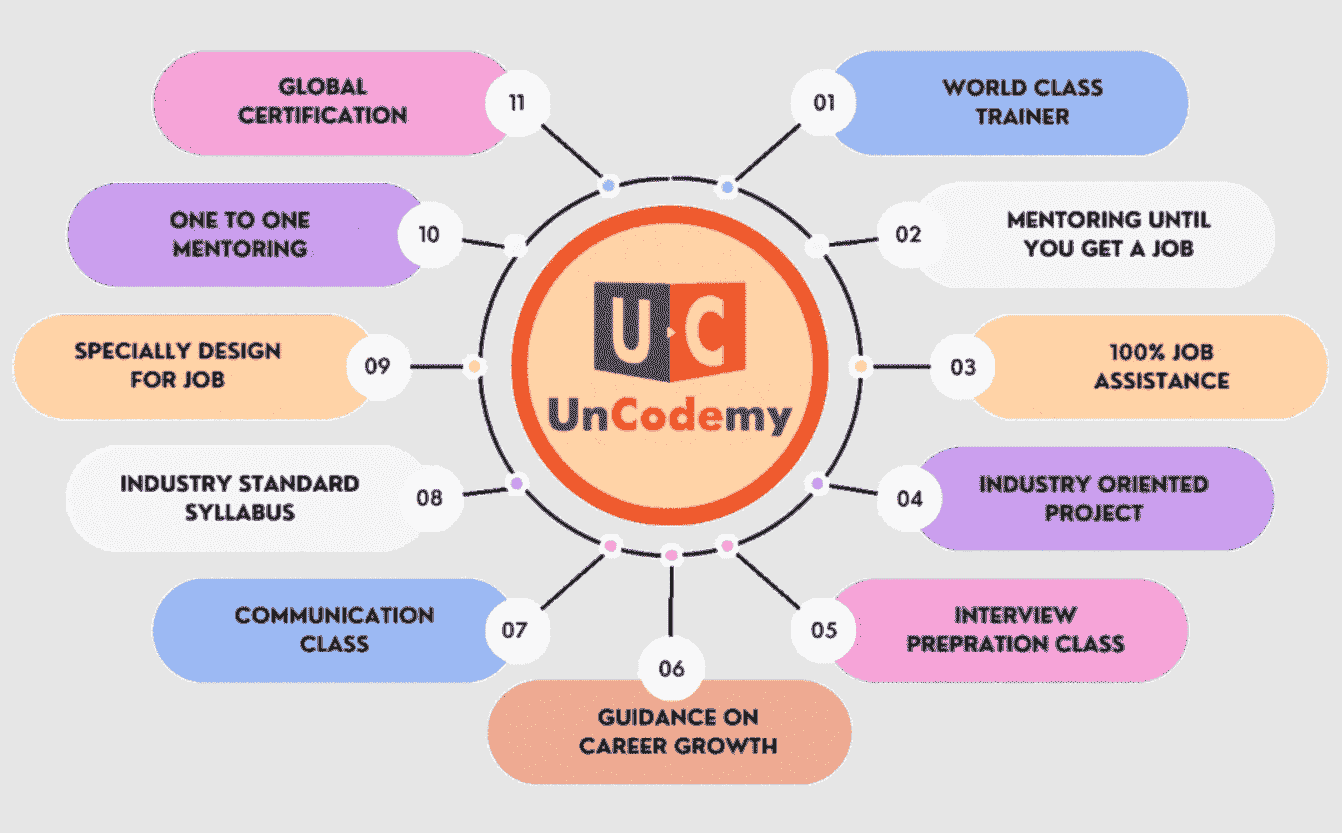
Our Program Includes:

Our track record speaks for itself! Almost everyone who has been part of Uncodemy, known for offering the Full Stack Developer Course, has gone on to become a sought-after Full Stack Developer professional. We understand that enrolling in a Full Stack Developer course, especially for beginners in Kakur, can be a significant decision. Here’s why Uncodemy stands out as the premier Full Stack Developer Training Institute in Coimbatore :

Our instructors come from MNCs and startups and bring working experience to their classes.

Trainers run expert-led sessions and personal grooming to help you start a career as a Full Stack Developer.

For working professionals or students living afar, we offer live and online Full Stack Developer classes that match the quality of our in-person training.

We cater to immediate career starters by providing special batches and flexible schedules for Full Stack Developer training in Coimbatore.

Along with Full Stack Developer, we offer in-depth courses in Python, Full Stack Development, Software Testing, Automation Testing, Business Analytics, Digital Marketing, AWS, Cloud Computing, Azure Training, Artificial Intelligence, Machine Learning, Manual Testing and SEO.

Dedicated placement support covers resume building, mock interviews and job-application help; it is not a job guarantee.

Review
google-icon
5/5 1550- Google Reviews
sulekha-icon
4.9/5 1250- Sulekha Reviews
just-dial-icon
4.9/5 1310- Just Dial Reviews
facebook-icon-2
4.9/5 1250- Facebook Reviews
download
4.9/5 1450- Urbanpro Reviews
MISWEZYVLNGEJNQKSL6V4ZDW4Y1
4.9/5 1350- Trustindex Reviews
animate
Uncodemy

Uncodemy gives you a great learning experience. You can attend live Full Stack Developer sessions with expert trainers. These sessions are led by top mentors and industry professionals. You also get access to detailed class recordings. This helps you review and learn at your own pace. Along with that, you will work on assignments to test your understanding. Real-world projects are included to give you hands-on practice. All these features make the course one of the best for learning Full Stack Development. It’s designed to help you build strong skills and grow in your career.

Young-male-holding-laptop-408w
Get a Real World Understanding Through Industry Projects
Uncodemy

We Provide EMI Facility for You

Full Stack Developer Course in Coimbatore with EMI facility to ensure unhindered learning.

Young-male-holding-laptop-408w

Deep Insight to Full Stack Developer Industry with Live projects-

Uncodemy offers instruction from industry experts on current Full Stack topics, with the course benefits listed below.

Full-stack Live Session Training Course in Coimbatore
Coimbatore learners attend live online classes with the trainer teaching in real time. Doubts are cleared on the call, screens can be shared, and every session is recorded so you can catch up after college or work.
Live Session
Classroom
Full Stack Classroom Training (Noida and Delhi only)
Classroom batches exist only at Noida Sector 1 and Laxmi Nagar in Delhi. Nobody from Coimbatore needs to travel: the online batch has the same curriculum, trainers and assignments.
iNTERVIEWS
Full Stack Interviews Preparation
Preparation for interviews includes coding questions in JavaScript, React and Node.js, a walk-through of your own project, and HR practice. Mock rounds are taken online, the same format many Coimbatore and Bengaluru companies use for first rounds.
Full Stack Internship for Coimbatore Learners
The programme includes an internship certificate. From Coimbatore the internship tasks are done remotely, which also gets you used to the way distributed teams review code and report progress.
Internship
Live Project
Live Project Work on Full-stack Training with Uncodemy
You work on projects from the early HTML and CSS weeks to complete MERN applications with login, roles and deployment. Treat each one as a portfolio piece and write down what you would improve next.
Full Stack Course with Placement Support
Support with placement covers resume building, mock interviews, interview preparation and job-application help. There is no job guarantee, and offers depend on your skills and on hiring at the time.
imageplacement

Become a Full Stack Developer- Talk to Expert Counselor

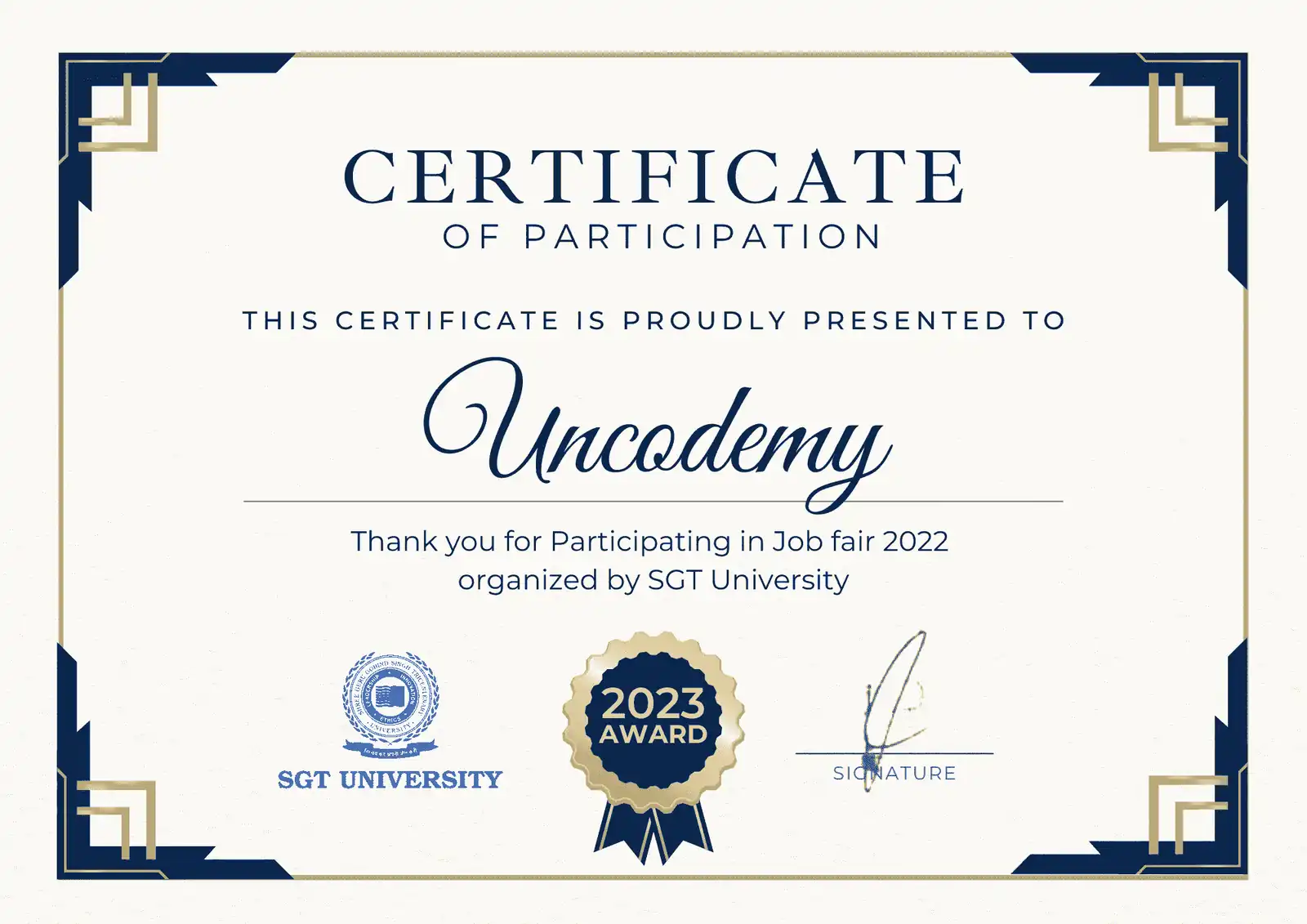
Awards
c3
c4

Sign Up for Our Full Stack Developer Training in Coimbatore ASAP!

Start your journey toward a successful career in Full Stack Development. Enroll in our Full Stack Developer Training Course in Coimbatore today. Gain the skills you need to become a certified Full Stack Developer professional. Our expert-led training will guide you every step of the way. Want to know more? Reach out to us. Learn about our Full Stack Developer classes and how they can help shape your future. We're here to support your goals and career growth.

Coimbatore guide

Full stack web development from Coimbatore

Coimbatore is one of the few non-metro cities in South India where a web developer can realistically find a first job without moving. It has IT-services offices, a set of software product companies, many small web agencies, and a large base of textile, pump and engineering businesses that sell online. This page is about building web applications from Kovai: which teams hire, what the online-commerce side of the local economy needs, how students from the city's engineering colleges compete for product roles, and when Chennai or Bengaluru is worth it.

Web teams

Where full stack developers work in Coimbatore

Web-development hiring in the city falls into three broad groups, and each one tests you differently.

Product companies

Firms that build their own SaaS or software products, many serving overseas customers. They look for React and Node.js skills, clean Git history and the ability to read an existing code base.

Services and outsourcing

IT-services offices and smaller outsourcing firms that build portals, dashboards and apps for clients. Fresher intake is larger, and training on the client's stack often follows.

Agencies

Design and digital agencies making websites, landing pages and online stores for regional brands. Expect WordPress and Shopify alongside custom JavaScript.

Read moreRead less

Most of the larger offices sit in the north-east of the city, around Saravanampatti and the Avinashi Road side. We describe kinds of employers only; Uncodemy has no hiring tie-up with any Coimbatore company. Openings are posted on LinkedIn and company career pages, and referrals from people already working in these offices count for a lot in a city where teams know each other.

Online stores

Kovai and Tiruppur brands selling online: the web work behind it

Coimbatore's textile mills, garment makers and the knitwear exporters of nearby Tiruppur increasingly sell directly to customers, as do local makers of kitchen appliances and pumps. A storefront is the visible part; the useful developer work is usually behind it.

  • Order dashboards that pull orders from a website and marketplaces into one screen for the dispatch team.
  • Inventory sync so that a size or colour sold on one channel disappears from the others.
  • Returns and exchange flows, which are where small brands lose most money.
  • Wholesale portals where retailers log in to see trade prices and place bulk orders.
Read moreRead less

These are descriptions of common needs, not projects Uncodemy runs with any brand. They map directly onto the course: React for the screens, Express and MongoDB for orders and stock, and authentication for the wholesale login. If you ever build for a real business, agree the scope, payment and ownership of the code and data in writing first.

Students

Engineering students in the city and the product-company gap

Coimbatore has a dense cluster of engineering colleges, including PSG College of Technology, Coimbatore Institute of Technology, Kumaraguru College of Technology, Sri Krishna College of Engineering and Technology and Amrita's campus at Ettimadai, plus many arts and science colleges offering BSc and BCA. Campus placement brings many IT-services offers, but product companies and startups usually hire through off-campus tests and portfolios.

Read moreRead less

That is where a full stack course helps most: it gives you two or three deployed applications and a GitHub profile that shows steady work, which is what an off-campus shortlist looks at. A sensible timing for students is to start in the third year, finish the core MERN modules before the final-year placement season, and use the final year for one larger project. Working graduates from the city's mills and engineering firms who want to switch into software also join, usually in weekend batches.

The course

Course format, fee and length for Coimbatore learners

Uncodemy has no branch in Tamil Nadu. Classrooms are only at Noida (Sector 1) and Delhi (Shakarpur Extension, Laxmi Nagar), so learners in Coimbatore, Tiruppur and Pollachi study live online, instructor-led; classroom batches only in Noida and Delhi. Sessions are live with the trainer, and recordings are kept for revision.

  • Duration6–8 months
  • Content200+ hours
  • Live classes120+ live sessions
  • Fee₹17,500 + GST
  • EMIEMI from ₹4,000+ a month (3 to 6 monthly instalments)
Read moreRead less

The 11 curriculum modules run from HTML5, CSS3 and Bootstrap through JavaScript, jQuery and React to Express, Node.js and MongoDB, with Python and Java modules as well; the toolset is HTML5, CSS3, Bootstrap, JavaScript, jQuery, React, Node.js, Express, MongoDB, Git/GitHub, plus Python and Java modules. The total payable is ₹20,650. No computer-science degree is required; basic familiarity with HTML, CSS and programming concepts helps, and the course starts from HTML basics. Learners who complete the programme receive the Uncodemy Certificate, the Uncodemy Agile Certificate and a Module Completion Certificate. Book a free demo class first and check that the batch timing works with your college or shift.

Project

Portfolio idea: an order tracker for a made-to-order boutique

Boutiques and tailoring units across the city take custom orders with measurements, fabric choice, alteration notes and a promised delivery date, and many still track them in a notebook. Building a tracker for this is a compact, realistic MERN project.

  1. Customer and measurement records, with measurements saved per garment type.
  2. Orders linked to a customer, with status: received, cutting, stitching, ready, delivered.
  3. A daily view of what is due tomorrow, and a warning for orders running late.
  4. Staff login that can change status but not prices; owner login that sees payments.
  5. A simple customer page where someone enters an order number and sees its status.
Read moreRead less

Use made-up data. In an interview, be ready to explain how you stop one customer seeing another customer's measurements and how you would add SMS or WhatsApp notifications later without rewriting the whole app.

Performance

Building fast sites for small businesses

Many local customers open business websites on mid-range phones and patchy mobile data. A developer who can make a site load quickly is genuinely useful to agencies and small brands, and it is a skill that interviewers like to probe.

Read moreRead less
  • Compress and correctly size images, and lazy-load anything below the first screen.
  • Keep JavaScript bundles small; check what each library adds before installing it.
  • Use browser developer tools and Lighthouse to measure before and after every change.
  • Write proper titles, headings and meta descriptions so local customers can find the site in search.

Keep a short before-and-after note for one of your projects, such as load time or page weight. It turns a vague claim into something an interviewer can check.

Stay or move

Staying in Kovai versus a first job in Chennai or Bengaluru

Coimbatore's advantage is cost and comfort: lower rent, family nearby and short commutes. The trade-off is fewer openings and, usually, somewhat lower salaries than Chennai or Bengaluru. Bengaluru has the largest pool of product and startup roles in the region; Chennai has a large services and enterprise base; both are reachable overnight by train or bus.

Read moreRead less

A common approach is to apply in all three in parallel and judge offers by what you will learn in the first year, not only by the headline figure. A Bengaluru startup where you ship features every week can be worth more over three years than a slightly better-paid role where you only maintain old code. Equally, a good Coimbatore product company lets you build experience without the cost of relocating, and remote roles become easier to win once you have a year or two of real work to show.

Pay

Indicative pay for web developers starting from Coimbatore

RouteTypical first roleIndicative yearly pay
Local agency or small services firmJunior web developer₹2–3.5 LPA
IT-services office in CoimbatoreTrainee / associate engineer₹3–4.5 LPA
Coimbatore product companyJunior full stack developer₹3.5–6 LPA
Chennai or Bengaluru startup or product firmFull stack / front-end developer₹4–8 LPA
Read moreRead less

These ranges are indicative only, drawn from the general level of public job listings; actual offers vary widely by company, skills and interview performance. Uncodemy provides dedicated placement support (resume building, mock interviews, interview preparation and job-application help; not a job guarantee).

Interviews

How Coimbatore web-development interviews usually run

Product companies here typically start with an online test mixing aptitude and basic coding, then one or two technical rounds where you build or debug something live, then a discussion with a manager. Agencies often skip the test and give a take-home task such as converting a design into a responsive page.

Read moreRead less
  • Expect array and string problems in JavaScript, plus questions on the event loop and promises.
  • In React, be clear on component state, effects, controlled forms and why keys matter.
  • For the back end, explain how a request travels from the browser through Express to MongoDB and back, and how you secure it.

Useful practice pages: the MERN interview questions for Coimbatore, React front-end questions and the Chennai MERN page.

Explore

More for Coimbatore learners

Other development and tech courses for Coimbatore learners

Full Stack Development course in nearby cities

Frequently Asked Questions

No. There is no Uncodemy centre in Coimbatore or anywhere in Tamil Nadu; classrooms are only in Noida (Sector 1) and Delhi (Shakarpur Extension, Laxmi Nagar). Coimbatore learners join the live online batches.

It is ₹17,500 + GST, which is ₹20,650 in total. EMI from ₹4,000+ a month (3 to 6 monthly instalments) is available if you prefer to spread the payment.

The course takes 6–8 months, with 200+ hours and 120+ live sessions, across 11 curriculum modules: HTML5, CSS3, Bootstrap, JavaScript, jQuery, React, Express, Node.js, MongoDB, Python and Java.

No. Uncodemy provides dedicated placement support (resume building, mock interviews, interview preparation and job-application help; not a job guarantee). Getting hired depends on your projects, practice and interview performance.

Many students start in the third year so the core MERN modules are done before final-year placements, leaving time for one larger project.

Both exist. Product companies and startups often use React and Node.js, while services firms may train you on the client's stack. The course also includes Java and Python modules.

Yes. The course is live online, so you only need a laptop and a stable connection; many learners outside the city study from home.

Apply in both. Coimbatore costs less to live in and has a fair number of openings; Bengaluru has many more product and startup roles. Judge offers by the work you will do in the first year.

Become a Full Stack Developer- Talk to Expert Counselor